
Developer: Neos Corporation
Available on: PC, Switch, Switch 2
Played on: Switch 2
Remember Monopoly? That cynical board game about capitalism that takes forever and your dad always beat you while laughing about it and nearly turned you off board games altogether? Not to mention its endless cycle of collectible licensed versions that people gift each other and never, ever actually play. That Monopoly?
Well, Culdcept Begins is basically Monopoly, if it was combined with a much better fantasy card battler, and dressed up as a JRPG. It’s an interesting board game design, and can be really fun, but also often extremely frustrating as only a roll-and-move game can be.
Read on for our review of Culdcept Begins!
Battlin’ Boards
Culdcept Begins reboots the turn-based, board game-like strategy series that saw its previous entry a decade ago on the Nintendo 3DS. This new entry features an all-new singleplayer campaign, as well as an online Versus mode (and solo Versus matches against the AI).
The campaign isn’t just an optional exercise and tutorial — it’s pretty much a necessity, and dare I say, the main way to play the game, as players earn coins and levels, unlock new cards, and purchase additional card packs using their hard-earned cash.
The Story mode stars Kamru, a young Cepter who wields the power of Culd, drawing upon magic to summon monsters using a board. Which is to say, a funky reason to combine a JRPG story with board game matches.
The single player campaign provides a solid foundation for learning the game’s various systems, such as managing mana, summoning creatures, and exploiting territory combos and abilities.
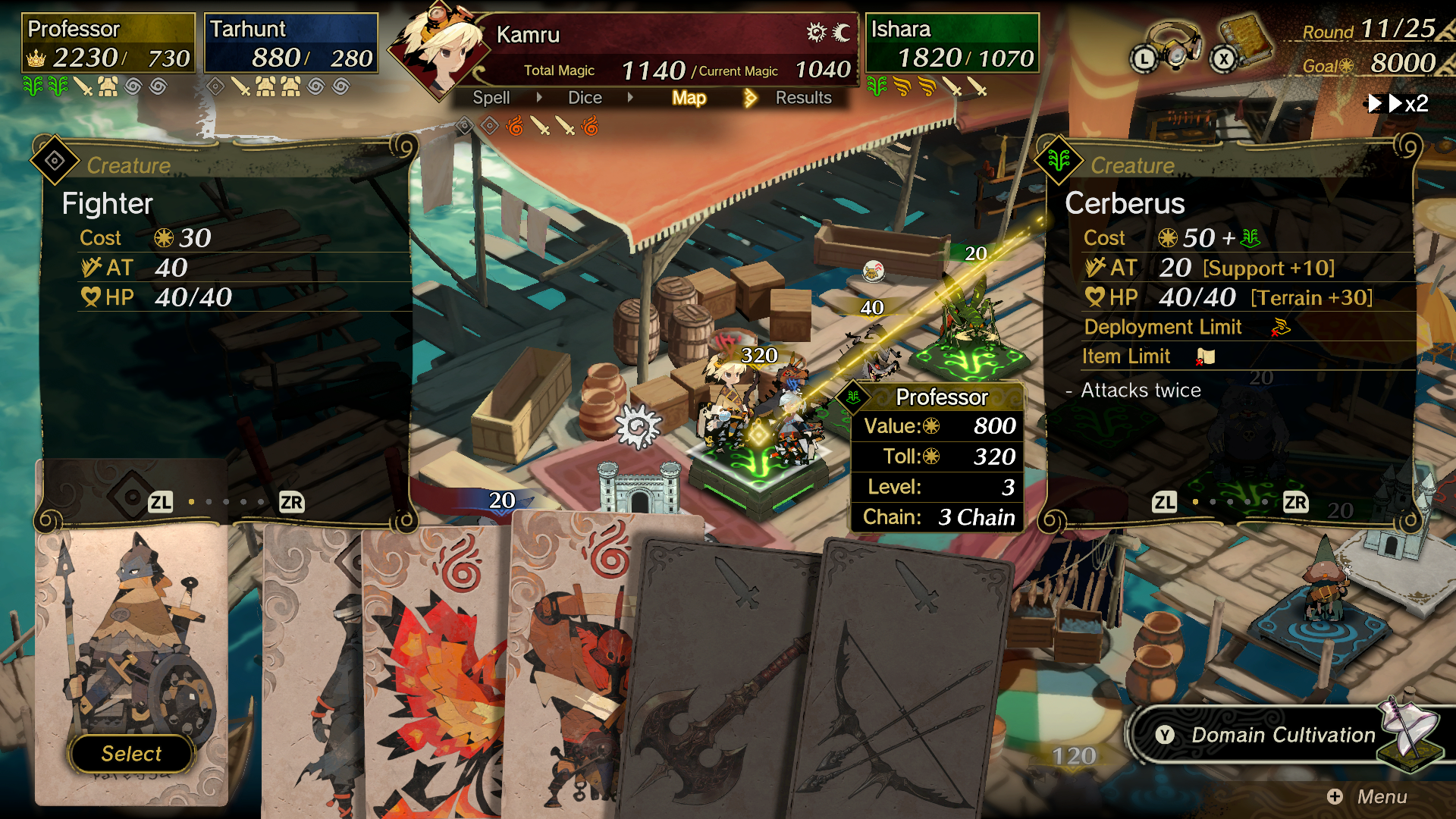
Though the boards can vary, the goal of each match is to reach the target mana goal (usually 8000) and end on a Castle space.
To amass that much mana, players will roll the d8, move onto a space, and claim it with with their creatures. Each claimed space is worth mana, and act as tolls to charge opponents who land on them — like owning property in Monopoly. Instead of buying houses and hotels, however, we level up the land as we pass it, pumping more mana into it, like putting our money into a savings account.
It actually makes a lot of sense once I start playing. Each space belongs to one of four elements, same as creatures, and matching a creature to its elemental space boosts their power. If a player owns multiple of the same elemental spaces, they get a bonus for each space (like having a monopoly, but without needing a target set).
The average match lasts at least 30 minutes and sometimes longer, especially if there are more than two players.
Multiplayer options are shockingly barren, however. There’s no local multiplayer whatsoever — a huge mistake given this is basically a board game, and 95% of the information is open.
Aside from playing matches online, the Switch 2 version can use GameShare to play with other Switch and Switch 2 owners, with only one copy of the game.
However, the GameShare version is limited to picking from a handful of boards and one of six pre-designed decks. There even isn’t a way to change the player’s avatar from the default characters from the campaign. A hugely missed opportunity.
 Card Shark (and Shark Cards)
What helps set Culdcept apart from its much-maligned board game inspiration are the cards.
Culdcept Begins features a huge trove of 400 different creature, item, and spell cards, and players are free to build their 40-card deck how they please. The average deck consists of about half creature cards, with the other half dedicated to items and spells.
The card artwork is striking and beautiful, from axes to ninjas and even the abstracted depiction of gaining mana.
Creature cards are the most important; they’re used to claim empty spaces, as well as to battle enemy creatures when landing on an opponent’s claimed space. Creatures come in an impressive variety of size, strengths, and skill sets, from cheap but bulky defensive walls like Wall of Stone and Statue, to the frustrating randomness of the Doppelganger and Specter.
My favorite strategy is to employ creatures that excel at specific tasks. Pillar of Flame and Whirlwind for claiming empty spaces and acting as good defenders, while the Gladiator and Executor are perfect for tearing through the enemy’s most prized spaces.
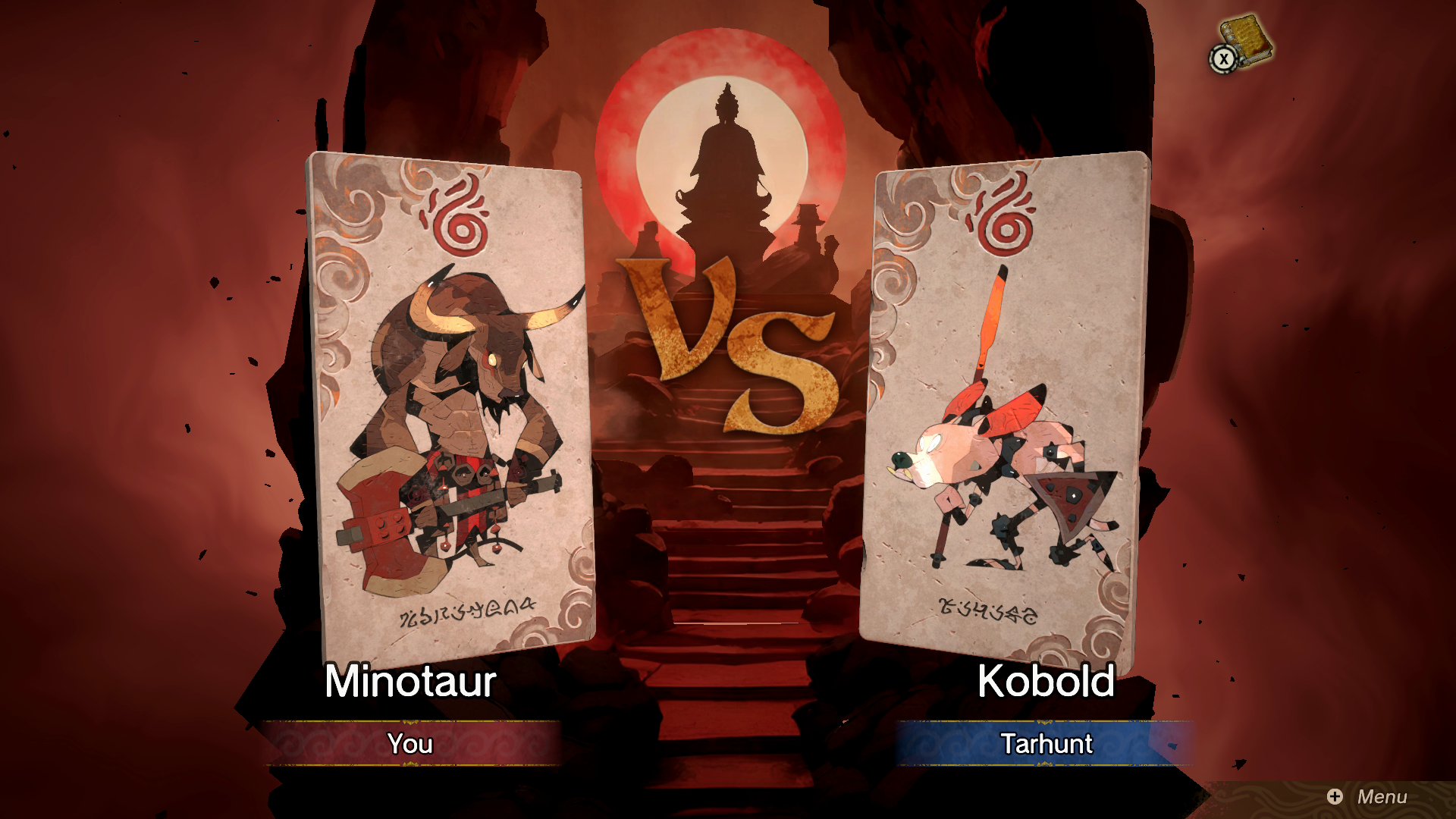
Item cards are the key to winning battles. When a player lands on another player’s owned space, they can pay the toll — or challenge the resident creature. By winning a battle, a player can take over that space, including stealing expensive, leveled-up spaces.
By using the right item card with the right creature (usually, weapons for attackers and armor for defenders), players can buff their creatures enough to win a critical match.
Interestingly, everyone plays with open hands, meaning you can freely look at each players’ hands at any time, creating much less randomness, and a lot more careful planning over each battle.
Big battles often turn the tide of a match, and make for exciting moments — if you can land on them in the first place.
 Culdcept’s critical problem that I keep coming back to is the same as any roll-and-move game: everyone is beholden to that initial dice roll.
There are times where I played perfectly, won smart battles, knew when to engage and when to pay, which spaces to claim, and which routes to take. And I’d still lose, simply because of the dice. Because it’s not the first player to reach the mana goal: you also have to reach the Castle space.
Plus, the more you move, the more often you lap around the board hitting Forts and Castles, which provide much-needed mana income, especially early game.
I lost too many 45-minute matches on a close last round, where I watched as an enemy player simply rolled higher than I did, and didn’t land on any of my spaces (nor I theirs).
As a game design note, I would preferred more randomness to the battles (like dice rolls), and less randomness for moving around the board!
Some spell cards can alter the dice rolls for players and their opponents, while others provide a mana boost, weaken and strengthen enemy creatures, or change the terrain type of a space.
There’s an almost overwhelming amount of card combos and deck strategy, and it can be delightfully agonizing choosing only 40 cards. Thankfully, I can create multiple decks and swap them around as I like. And even a dozen hours later I’m still buying card packs and unlocking rare new cards — or seeing opponents drop new cards I’ve never seen before.
The Rating
Culdcept Begins has been rated E10+ by the ESRB, with Alcohol References, Fantasy Violence, Mild Language, Mild Suggestive Themes, and Tobacco Use. See our full game picker entry for more details!
The Takeaway
Culdcept Begins is almost a tale of two games. I love the card battling half, with the huge variety and of creatures and abilities and combos, not to mention absolutely gorgeous artwork, and the incredible depth of deckbuilding. But I only tolerate the board game component and its frustrating dice rolls that ultimately determine everything. Including a main campaign and story is nice, though nothing noteworthy, but the lack of local multiplayer is an egregious omission that no talented Cepter can overcome.
Culdcept Begins is available on Steam PC, Nintendo Switch, and Switch 2.