
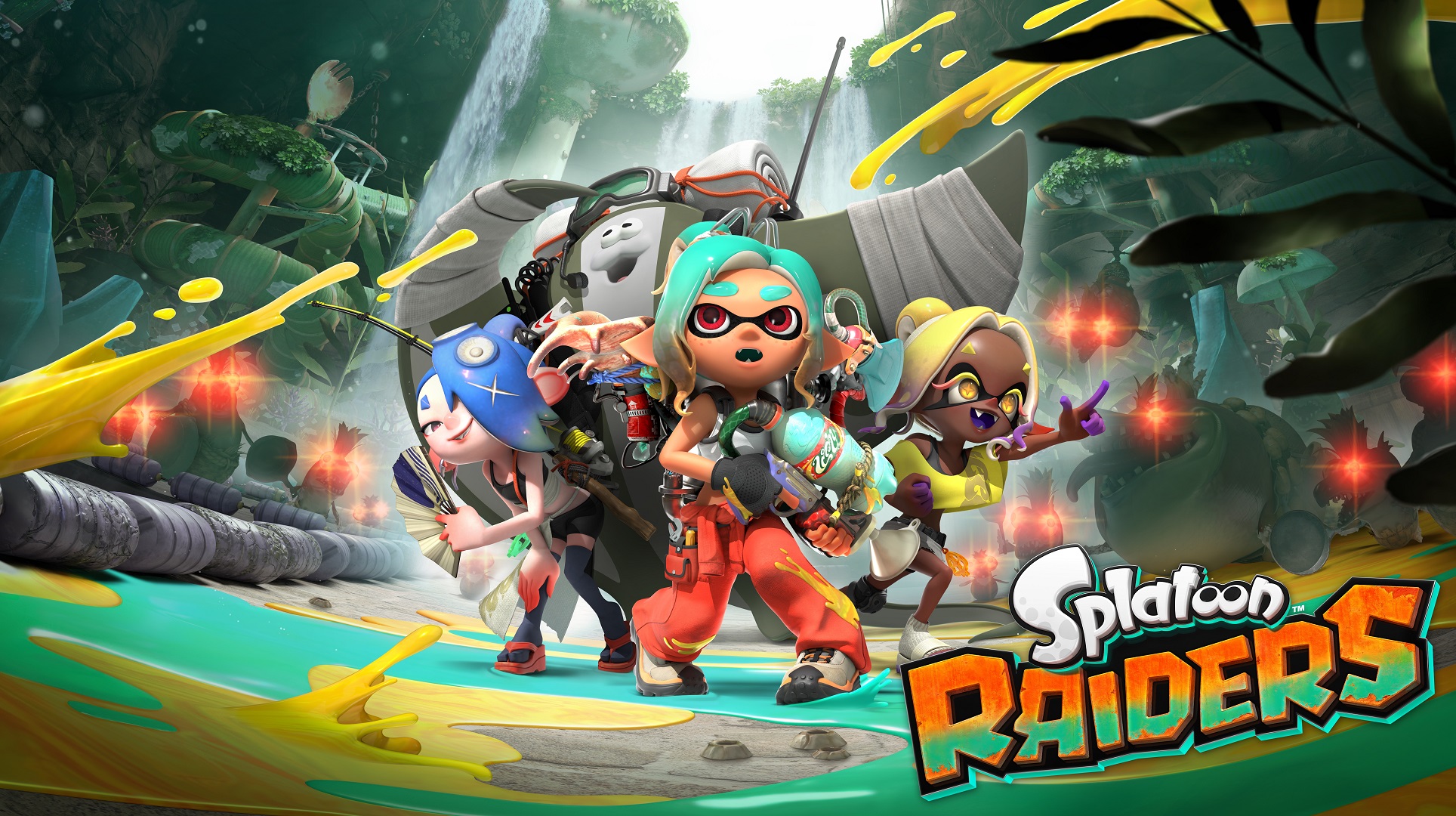
Developer: Nintendo
Available on: Switch 2
Splatoon was a novel concept when it launched back on the Wii U in 2015: Nintendo’s answer to competitive shooters by way of stylized paintball matches. The successful blend of cartoon punk aesthetic, vibrant colors, and a solid shooter foundation led to the birth of a new Nintendo franchise that has spawned multiple best-selling sequels, esports tournaments, and merchandise.
Splatoon Raiders is the first major spinoff of the Nintendo series, transforming a competitive, team-based shooter into a single player adventure with wave-based encounters. Thanks to a variety of weapons, abilities, and enemies, the final result mostly works — though the lack of local couch co-op is a huge bummer.
Read on for our review of Splatoon Raiders!
Splat Pack
After customizing my avatar, I’m introduced to Deep Cut, the pop star trio from Splatoon 3, as their pilot, mechanic, and all-around take-care-of-it squidling.
In the opening scene, our plane goes down in the large archipelago known as the Spirhalite Islands. But it’s a serendipitous crash — the pop stars are also treasure hunters!
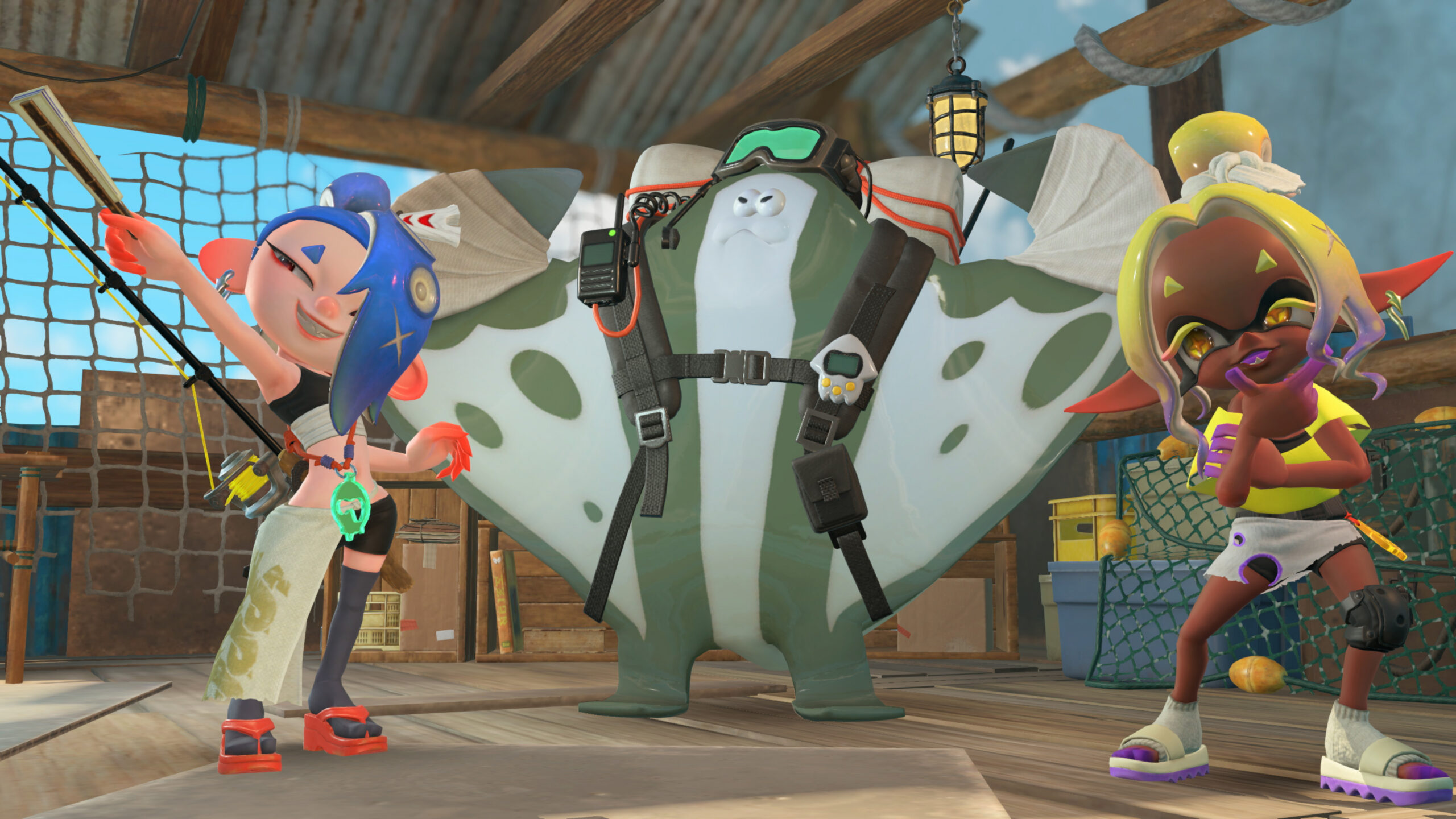
Shiver, Big Man, and Frye are your sole companions
The good news is there’s plenty of treasure to be found in these islands. The bad news: they’re also crawling with Salmonids. Salmonids are those cartoonishly freaky fish that have plagued Splatoon players in the various single-player modes throughout the series.
There isn’t much more story to speak of; players go on missions to secure treasure while surviving and defeating waves of enemies.
Between the action, our Hideout Ship acts as a generously sized floating base of operations, where we can swap gear, level up with skill points, and test out new weapons. The members of Deep Cut act as different ultimate abilities that can be equipped via our trusty tank bot companion, and there are a few cutscenes between bosses as we delve deeper into the Islands.
The art style and movement is classic Splatoon, with the quick ability to transform into a squid and move through ink (and reload and heal!) that feels just as fun and satisfying as in the main series.
One weird negative, however, is the music. The Splatoon series is known for its exceptionally quirky and cool soundtrack, but I found the discordant sounds of the missions to be completely weird and off-putting.
Island Hopping
There are three main kinds of missions in Splatoon Raiders: treasure hunts, big crystal mining, and Salmonid dens.
Salmonid dens are a standard single-area, wave-based survival mode, and the kind you’re probably most familiar with if you’ve played other co-op or single player modes in shooters. However, the clock is still the enemy here, as I need to defeat a certain amount of enemies (and collect their Power Eggs) before the timer runs out.
Treasure hunts are linear adventures through a level, punctuated by some light platforming, and several pockets of enemy encounters. I wasn’t a big fan of the platforming bits; like many shooters, the gameplay definitely lags whenever you’re not actively battling enemies.
The big crystal mining levels are far more open — and my personal favorite kind of mission. Players are given a decent-size area with several smaller crystal nodes packed with enemies. The smaller nodes respawn periodically (as do the Salmonid), allowing players to grind out more shards and experience before tackling on the big crystal for an epic climax.
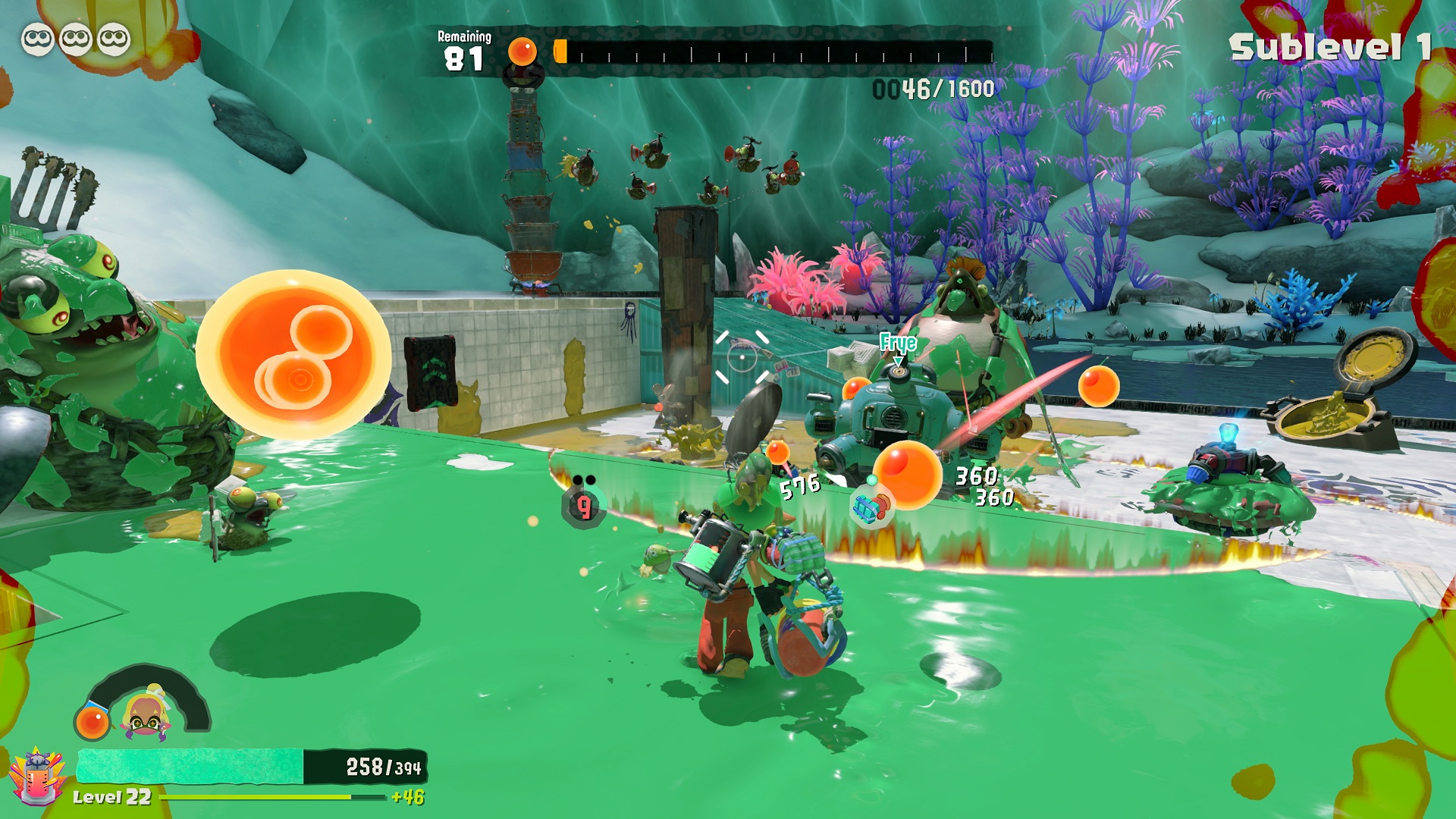
Every battle gets gloriously chaotic and messy
There are also the big multi-level boss fights, which are basically three challenging Dens put together, as well as the large-scale major boss battles, which are solo boss encounters with some specific patterns and gimmicks (and thankfully, no timer).
There’s also a hidden kind of mission, unlocked throughout the game: Sampler Dungeons. These dungeons must be found via compass on the island map. They all focus on only a single gadget or gimmick, such as surfing, slicing, turrets, or bombloons. I kind of hated these mini-challenges, especially the movement-based ones, finding them incredibly frustrating and annoying (the dash one nearly made me rage-quit the entire game, oof). I would’ve entirely skipped them if they didn’t offer a precious skill point for each completion.
Fish Frye
In almost every mission, we’re dealing with waves of Salmonids. These nasty fish come in a huge variety of enemy types and attacks, from the large but slow Cohocks to the springy Chums. There are flying Salmonid, Salmonid that wear truck-like armor, Salmoids that fly in UFOs that provide shields, Salmonid that fire laser beams from atop a stack of pans, and more.
Thankfully I have a variety of weapons at my disposal that are just as inventive (it probably helps that I haven’t played a Splatoon game since the original!). From the straightforward blasters, shotguns, and miniguns to the more creative, brushes, rollers, and just a big ol’ bucket of paint.
There are also three different tanks, and multiple gadgets that provide extra abilities. Tanks determine which gadgets I can use and trend toward different playstyles. The Tactical Tank favors a more keep-away style with long-range turrets, while the Power Tank has some awesome melee attacks and bonuses.
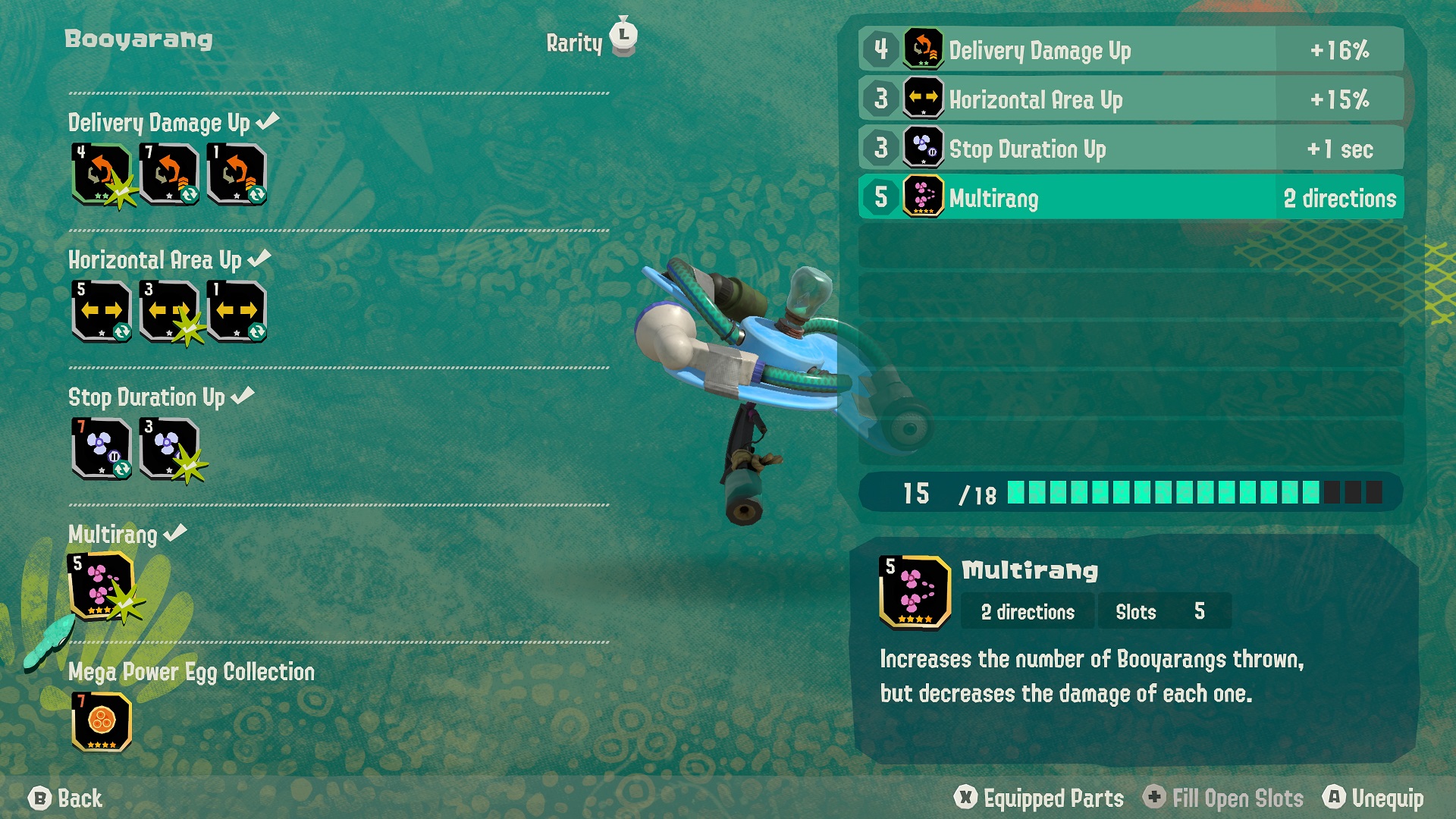
Each gadget has a large number of equippable upgrades
I’m not the best shot, so I loved using the Roller Brush with the Power Tank — though flying enemies were a complete pain. The game encourages me to try all three tanks, as you get different rewards for beating bosses with each tank. I do wish I could swap between at least two different weapons in a match, however.
Weapons and gadgets all have their own upgrades. Weapons have rarity and passive abilities, such as increasing speed or health, while gadgets can equip a number of parts that increase, or even alter, their function.
My beloved Power Tank has a gadget called Splatellites that orbit paintballs around me. Different parts could deal damage vertically, knock enemies back, add vertical damage, increase the duration, and more.
On the other hand, incrementally increasing passive stats by +9% isn’t the most exciting upgrade, and that’s what most of the levels up and parts end up doing.
The Rating
Splatoon Raiders is rated E10+ by the ESRB, with Fantasy Violence. Thanks to the paintball theme and the goofy fish enemies, it’s an easy way for kids to play a shooter. See more details in our Game Picker entry of Splatoon Raiders.
The Takeaway
At first glance, Splatoon Raiders looks designed for kids and fans of the series. But as a non-Splatoon fan, I was pleasantly surprised by how it challenged me again and again, and the depth of its gadget upgrade system. Playing on the standard difficulty was often a challenge thanks to the aggressive timer, though thankfully every loss still resulted in positive experience, leveling, and loot.
My biggest complaint is that my family can’t properly share the experience! Splatoon Raiders’ supports online co-op with friends who own the game, or by randomly joining someone who requested assistance (and vice-versa). I would’ve loved to play Splatoon Raiders with split-screen local co-op, or via GameShare. A hugely missed opportunity for an otherwise engaging experience that’s far more than a simple spinoff.
Splatoon Raiders is available on Nintendo Switch 2.