
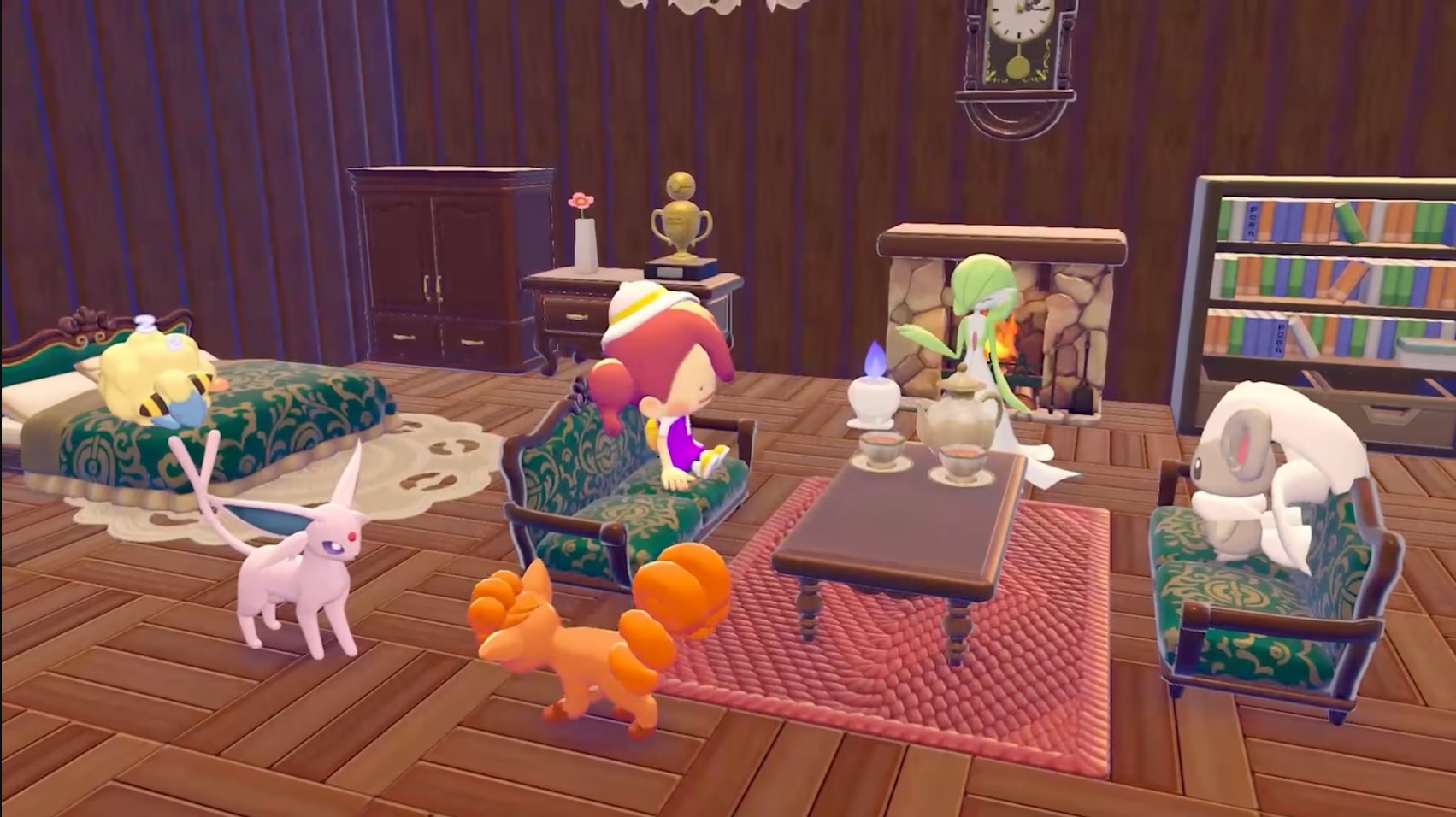
Life sim spinoff game Pokémon Pokopia has proven so popular, that it’s sold out at most major retailers. Recently, Amazon has even raised the price to $80 due to supply constraints.
But are the supply constraints due to Nintendo undervaluing one of their biggest IPs? Or is it because the physical edition is simply a game-key card that’s not getting much production and distribution?
Let’s Get Physical
Call me old-fashioned, but I still prefer purchasing physical game boxes, especially when it comes to major, AAA releases from first-party publishers, whether it’s a new Mario or Zelda, or Horizon, or Grand Theft Auto, or Borderlands.
And certainly that includes Pokémon.
Once upon a time, it’s because I was a frequent connoisseur of trading in games at GameStop and buying used games, especially back in college when money was tight. But used game purchases have faded over the last decade, and now I just prefer displaying console games on a shelf — even if some game boxes are downright hideous (cough Switch cough).
All that is to say that I’m anxiously awaiting the arrival of Pokémon Pokopia several days after it launched, because the Pokémon spinoff has proven crazy-popular, and I refuse to give in and purchase the digital version.
Yet in the world of game-key cards, my love of physical media is looking more ridiculous than quaint.
Now with Less Game Data
As a reminder, a game-key card isn’t the same as a game cartridge. A game cartridge contains the entire game as it was released, sans any post-launch (or day one) patches and updates.
A game-key card, while looking like a game cartridge, does not contain the full game data. Instead, it’s basically just a key code that unlocks the game on your platform — exactly like a digital purchase, except that it also requires the game-key card to be plugged into the system. But you’re still going to have to download the full game onto your system before you can play.
Basically: game-key cards are the worst of both worlds!
Obviously, fans are not happy that they’re no longer getting the actual games on game cartridges. As a long-time gamer, I’m not terribly surprised, though nearly every new physical game wants to download a new update these days, even on launch day.
I’m also not surprised at this gradual move away from physical media. It’s clearly in the publisher’s best interest to pivot toward a purely digital ecosystem. But, it’s still helpful to have physical boxes available at retail stores, and for parents and grandparents to give better gaming gifts rather than eShop gift cards.
More importantly, physical games can easily be given to friends and family in a time-honored sharing tradition.
Waiting just a few extra days for a new game isn’t the end of the world for a working parent like me, though not having the game for an entire weekend does sting a bit. At any time I could’ve easily purchased the digital version on the Nintendo eShop for the same price, and had zero trouble.
Now I feel like I’m waiting for the privilege of having a physical box, and a physical cartridge that’s probably more annoying than it’s worth — especially if I’m playing multiple games on Switch 2 (which I often am) and ever need to swap out the cartridge.
Some publishers include extra goodies in their physical boxes, but often at a marked-up price, or only in fancy exclusive editions. Now with game-key cards (which Nintendo isn’t the first publisher to use) we’re getting even less than just a basic standard edition.
We’re seeing the gradual loss of physical media, and it makes me bummed. I’m looking forward to getting my hands on Pokopia, but in the Switch 2 game-key card era, I’m not sure how many more physical editions of Nintendo games I’ll bother purchasing.