
“Make sure we draft a Mail Room today, there’s a package waiting for us.”
“The Darkroom has more exits, but we haven’t found the Utility Box yet. Do we risk it?”
“Should we draft the Security Room now, or save our last gem?”
“Wow, take a picture of this diagram! We’ll probably need it later.”
“We’re running out of keys, do we open the locked door, or backtrack to the hallway?”
These are some of the comments made while playing immersive puzzle game Blue Prince in my family room. Although technically a single-player game, its Myst-like gameplay, intriguing roguelike design, and freeform puzzles have captivated my entire family for the last several weeks.
One Prince, Two Prince, Red Prince, Blue Prince
Released in 2025, Blue Prince puts the player in the shoes of Simon, the teenage nephew of the late Herbert Sinclair. Sinclair was the wealthy owner of the Mt. Holly Estate. He’s willed Simon as the heir and owner, on one condition: he must find the hidden 46th room, within the 45-room manor.
And he must find it in a single day.
But the manor is constantly shifting, with only the Entrance Hall, and the Antechamber far to the North, visible among the empty 9×5 grid that makes up the rectangular manor.
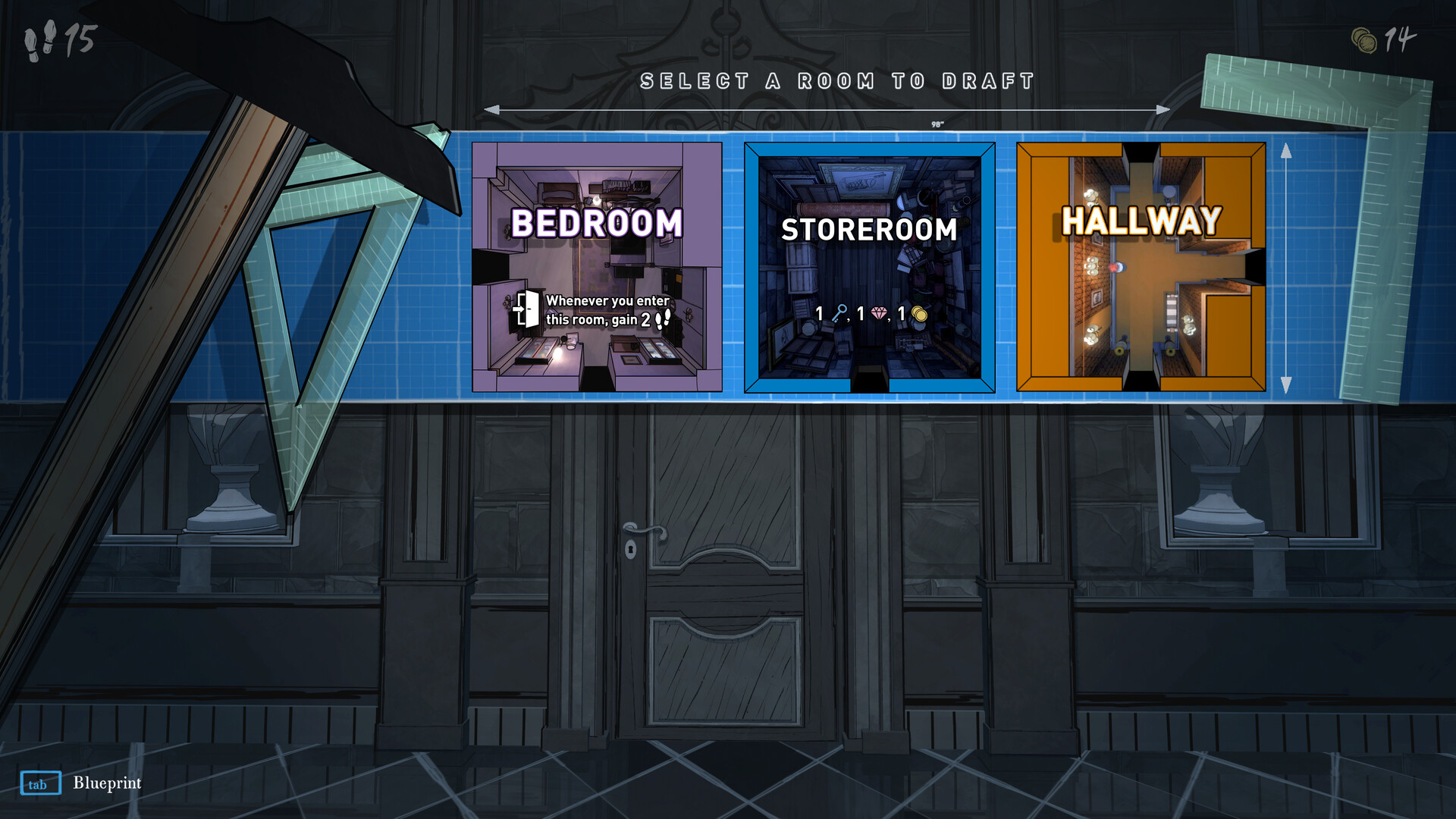
When opening a new door, we’re presented with three randomly drawn room options. Some are dead-ends, others provide new exits, and most include clues, puzzles, global buffs, items, or some other fun interactions.
We can freely explore each room in first-person, but Simon has a limited number of “steps” per day, with each step decreasing whenever we enter a new room. Randomly found (or purchased) food can restore steps, keys can unlock locked doors, and gems gain access to rarer rooms with important features. The Security Room can manipulate keycards, the Library offers some nice clues and information, and the Boiler Room features a big puzzle that can provide power to other rooms — if we can design the manor to make it work.
To go into too much detail would spoil the experience, as Blue Prince is intriguingly tight-lipped about its own gameplay and structure. It’s very much about learning while doing!
 Running out of steps, or doors, or keys, isn’t game over, though we are then forced to “Call it a Day.” Blue Prince is a roguelike game, where the player is supposed to spend repeated runs (or days) exploring the manor. Ending the Day resets the manor, and our items.
The rare and powerful permanent additions create an important layer of meta progression, as well as solving critical puzzles that don’t reset, or learning the correct sequence of items and rooms to reach new areas in the future.
Our House
The first-person view is a rarity in puzzle games, and, at the risk of aging myself, reminds me of playing Myst and its sequels back in the 90s. While only one player is controlling Simon (usually my partner), others in the room (me, and occasionally our kids) are just as engaged. We chime in about where to go, what to inspect, and critically, which room to draft next.
We all feel the collective triumph from solving a new puzzle — and more eyes on a problem are always better!
Just recently I was walking through a certain room that we’ve been though a dozen times before. My partner started with “You know…” which lead us to inspecting a clue again, then solving a puzzle. Shouting and high-fiving quickly ensued!
And then there’s the shared agony of a setback. Finding a critical item, or unlocking a new path, only to run out of steps, or keys, or gems, or run afoul of bad room draws that prevent us from completing a multi-stage puzzle before we’re forced to reset.
It’s the kind of game that we sit around and talk about during family dinner. What could this clue mean? How do we solve this puzzle? Which rooms do we need to find in our next run? And what’s the deal with that missing writer?
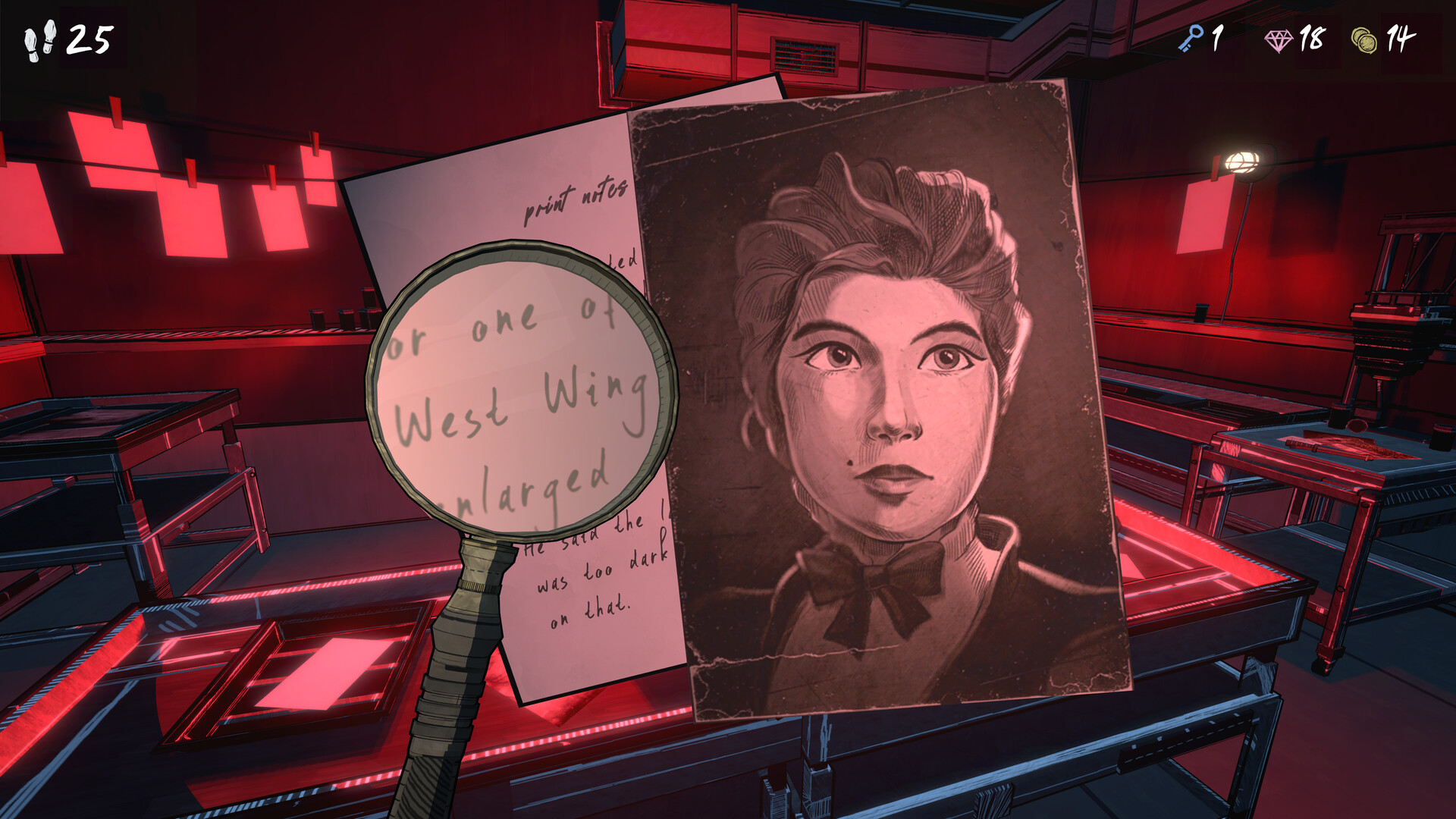 It would’ve been all too-easy to turn Blue Prince into a horror game. It almost feels like one anyway, as we explore a completely empty manor in steady first-person.
I have nothing against horror games, but I’m glad Blue Prince avoids going down that road, and is more available to a wider audience. Exploring a large, labyrinthine house can be unsettling, but it’s (usually) brightly lit, with an air of mystery and intrigue, instead of foreboding and terror.
Blue Prince may not be designed for children explicitly (it features an E10+ rating), and young-ins like my five year old will probably grow bored with its methodical, cerebral pace. But this is a truly special, collaborative puzzle game experience enjoyed by the whole family.
Blue Prince is available on PC, Mac, PlayStation 5, Switch 2, and Xbox Series X/S. It’s rated E10+ by the ESRB.