
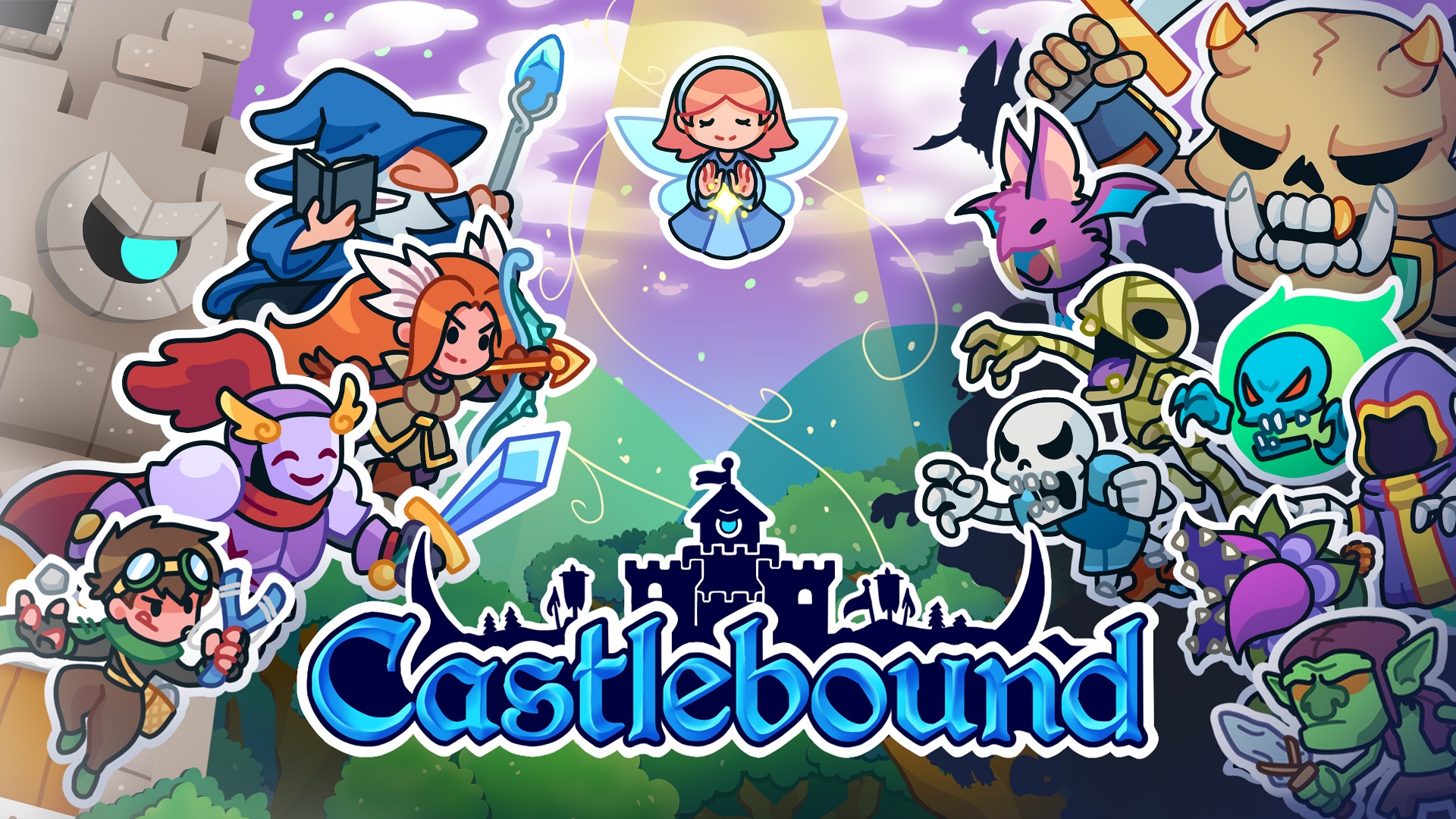
Developer: Ogre Pixel
Available on: Steam, Switch, Switch 2
Played on: Switch 2
Back in the ancient days of the 1990s, some of my favorite co-op games were side-scrolling shoot -em ups and beat ’em ups such as Sunset Riders, Streets of Rage, and Teenage Mutant Ninja Turtles: Turtles in Time. Castlebound attempts to channel that same retro-colorful energy, though its roguelike difficulty sometimes makes it a frustrating co-op game for families.
Read on for our review of Castlebound!
This Castle Was Made for Walkin’
After a weirdly lengthy opening cutscene, the game opens to its relatively simple premise: escort a walking castle through monster-infested lands. The castle always stays at the left side of the screen, while the screen scrolls by, full of enemies, platforms, and obstacles.
As the beginning archer character, Lenora, I can jump, fire my bow, or do a quick little backwards dash, which frankly feels useless most of the time. Combat closely resembles a chaotic shoot -em up, as I rapidly press (or hold) the fire button while jumping around trying to destroy enemies before they can hit the castle.
The castle has its own life bar — and so do we! Managing our health, and the castle’s, with the constant flow of enemies is a challenging, and sometimes frustrating experience.
As a roguelike action-platformer, we earn Soul Coins at the end of each run, win or lose. These coins can be spent on permanent upgrades to make our next run a bit easier.
Upgrades include faster shooting, more health, and faster move speed. Between segments of a level we’re given upgrade cards with class-specific boosts, such as explosive arrows for the archer, or additional familiars for the wizard. Most of these upgrade cards must first be unlocked with Soul Coins as well. It’s a bit of a grind, especially early on with repeated attempts against the first area, but at least there’s a sense of progress with each attempt.
The main story takes players through four main regions, then a final boss battle. Along the way, we unlock new upgrades, alternate skins, an optional hard mode, and an arcade mode.
Arcade mode is just endless scrolling with an increasing amount of enemies and powerups, and it’s actually a lot of fun. I was able to complete a run of over 20 minutes, earning over 5000 Soul Coins, and setting me up nicely for some powerful upgrades.
Gather Your Party
Castlebound supports up to four player local co-op, and four playable characters, with no restrictions on players playing multiple characters. The archer is unlocked at first, then the wizard soon after. The slingshooter requires 300 Soul Coins, while the knight isn’t unlocked until making it halfway through the desert region.
The first three play similarly: a constant barrage of firing their ranged weapon at enemies, with slightly different kinds of projectiles.
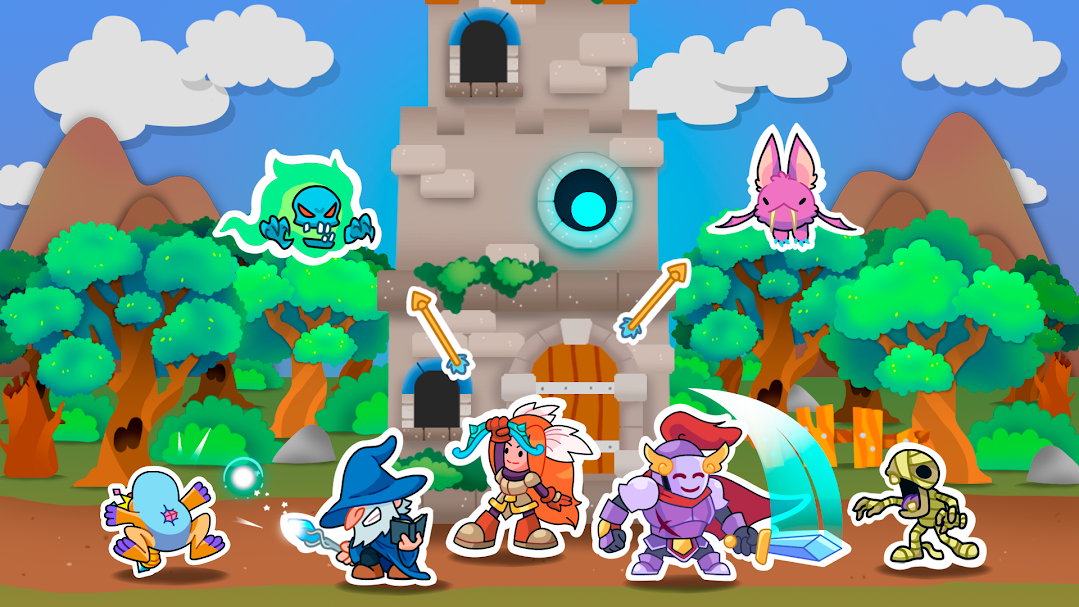
The papercraft art style is fantastic
Of the three, I found the wizard far more powerful and dominating. His shots fire straight ahead, and pass through obstacles. Plus, he has the only useful secondary ability in the familiar. The familiar acts as a proximity mine that moves with the screen and explodes whenever an enemy touches it, doing large amounts of damage. And yes, it works marvelously on bosses as well! All the other characters have defensive secondary abilities that pale in comparison to simply doing more damage.
It’s worth highlighting the knight as an interesting play style. The sole melee character has to get up close to enemies. I like the satisfying “schwing” sound that accompanies each strike — until I have to hear it over and over and over again.
The knight’s upgrades help support his riskier play style, with bigger defense and damage reflection. He’s a great pick for younger players, too! But you’ll have to play through at least an hour or more and reach the second area to unlock him.
Couch co-op is where Castlebound truly shines — or at least, where it should shine. The enemies and health appear to scale with the number of players, and the chaos of constant action creates its own interesting challenge.
However, we found the overall difficulty just a little too much at times, especially during lengthy boss battles. The bosses have absurd amounts of health in co-op (even after repeatedly upgrading everyone’s attacks), and I’m definitely not a big fan of repetitive multi-stage boss fights.
My favorite part of Castlebound is the art style. The flat, papercraft characters and enemies pop with lots of color and detail. The game also features an impressive amount of enemies, and each area has its own unique creatures. I especially love the Graveyard level with its zombies, disembodied hands, flying specters, and fast-moving ravens. Plus, some of the levels even scroll in different directions, which is a delightfully refreshing (and extra challenging!). The retro-inspired music is also a total bop.
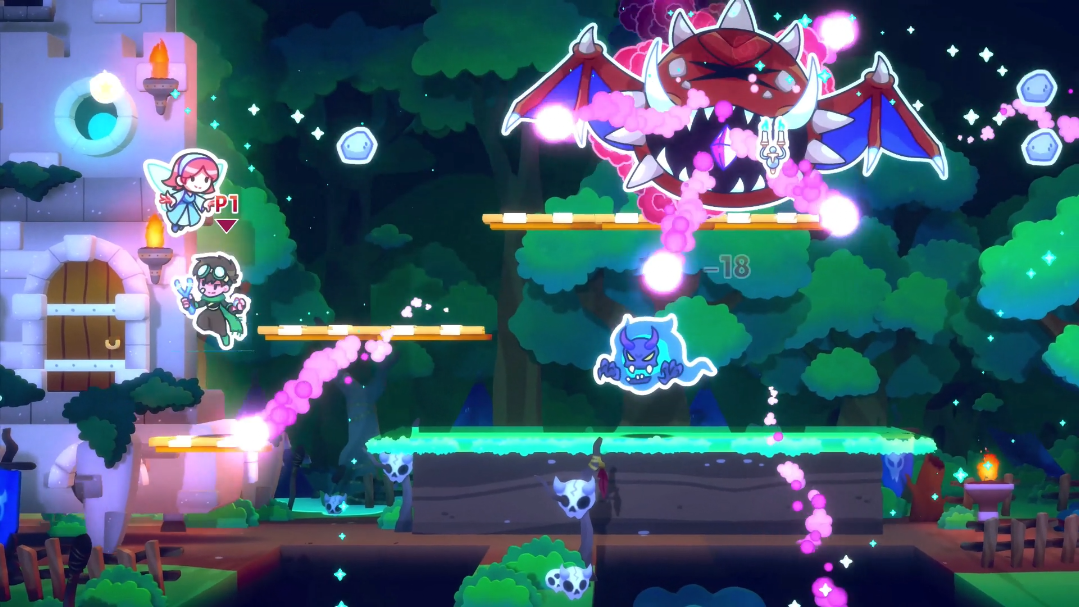
The first boss is a big difficulty spike
The Rating
Castlebound is rated E10+ with Fantasy Violence by the ESRB. The colorful, animated-feel of the world, and retro-gameplay is an easy sell for a younger audience. Combat is fast and frantic, requiring coordination and movement in 2D. See our Game Picker entry for more details.
The Takeaway
Castlebound has all the right ingredients for a fun combination of 2D action and tower defense. It deviates from its retro roots with its more modern roguelike progression, which means players feel far weaker in the early hours before acquiring some critical upgrades. The scaling for co-op also feels a little unbalanced for family play. But if you crave a grindy challenge with simplified co-op gameplay, Castlebound delivers.
Castlebound is available on Steam PC, Switch, and Switch 2.