
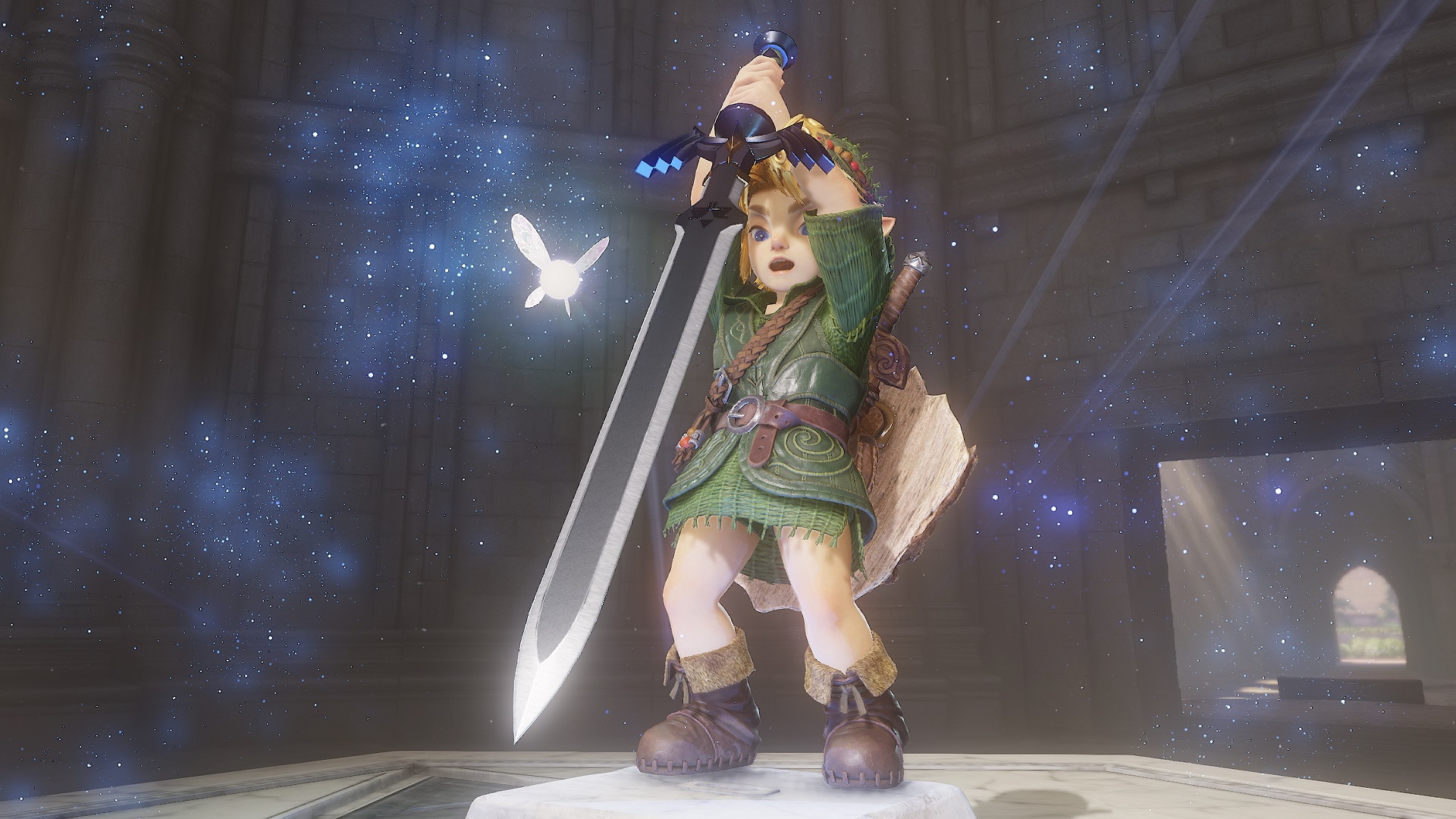
It’s 1998. I’m an awkward freshman in high school. I love gaming, and marching band. I’m starting to find my people. But it’s not until an upperclassman loudly declares that he just wants to go home and play The Legend of Zelda: Ocarina of Time during practice that I realize just how big and popular one of my new favorite games is.
Ocarina of Time is not only a huge leap forward for the Zelda franchise, but as an early 3D open world adventure, pushes the envelope of what a high quality video game can be.
It’s 2004. I’m away at University, separated from my friends for the first time. Online gaming has only recently exploded, and for the first time in my life, I have access to always-on, high-speed internet.
And a newly launched MMORPG called World of Warcraft.
For months, my friends and I stay connected in the virtual world, enjoying how well the MMO translates the strategy game series into a fully 3D world full of quests, factions, monsters, and near endless progression.
It’s 2026. I have a family, a career, a mortgage. And I still love gaming.
As an elder millennial (Xennial, if you’re nasty), I have been in gaming nirvana over the last several weeks. Putting aside the incredible launch of Grand Theft Auto 6, which is the biggest entertainment launch of all time, I have been suckling at the nostalgic teats of The Legend of Zelda: Ocarina of Time (2026), and World of Warcraft: Forever.
I have huge amounts of nostalgia for both games, which aim to recapture the gaming era of their respective golden ages, though they tackle nostalgia in different ways.
Ocarina of Memories
Ocarina of Time is a complete remake of the ’98 original from the ground up. The Nintendo 64 game was revolutionary when it launched, featuring a fully 3D Zelda game, and limited open world exploration, while maintaining the same great dungeon crawling and equipment usage the series is beloved for.
Those 90s 3D graphics are rough by today’s standards (though not as distressingly polygonal as OG Final Fantasy 7!). Nintendo has updated the visuals before, most notably in Ocarina of Time 3D on the 3DS, but nothing like the full overhaul in this new remake.
The world has been rebuilt to modern standards, yet with the same saturated colors and exaggerated character designs of the original.
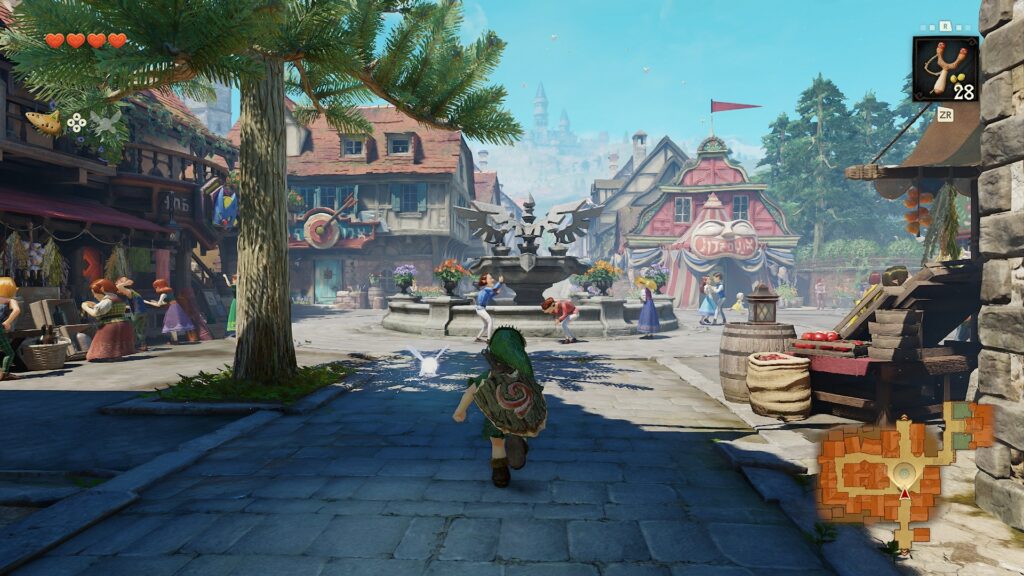 I’m constantly astonished by the beauty of the world, right down to Link’s long knit cap and green tunic. And equally astonished at how exact the world has been replicated: Kakariko Village, the Lost Woods, the Shadow Temple — everything is laid out exactly as I remember, despite looking completely fresh and stunning. And don’t even get me started on that impossibly catchy soundtrack!
Level design and core gameplay has also been preserved, including the “Z-targeting” that helps the player fight enemies in the 3D world.
And there’s a jump button! I had to look it up, but the original game did not, in fact, have a dedicated jump button — it was automatic. Jumping in a 3D world has become ubiquitous, and I’m thankful it was added in for the remake, and feels completely natural.
I’m also thankful for new voice acting, especially when playing around my youngest child. Link remains one of the most famous silent protagonists, but the major characters he meets along the way, including Princess Zelda herself, are fully voiced during important cutscenes, and it’s a huge draw for immersion.
I also love the new humming feature for playing the ocarina. Whenever Link brings up the ocarina, you can still press the appropriate buttons for a song, or you can hum the tune! Even in our living room playing on a docked TV, the Switch 2 easily picks up our humming and singing. My kids love to help, to the point that they insist on singing a tune for every puzzle. It’s easily the best feature I’ve seen yet for the built-in microphone.
Forever Young
WoW: Forever recently launched as Blizzard Entertainment’s second attempt at nostalgia baiting for the aging MMO. Whereas WoW: Classic was a perfect recreation of the original 2004 version (and has since progressed along the same rate of expansion packs), WoW: Forever takes the original game and expands in a different direction, with new quests, content, and modern quality of life improvements.
The goal for WoW: Forever is to preserve the game as it was, before the addition of expansion packs, huge world-changing storylines, and an emphasis on end-game raiding versus the journey to max level.
I initially had some skepticism jumping back into World of Warcraft. I had never kept up with or rejoined the MMO over the years, even when WoW: Classic was released, feeling that my time with the ongoing game had long since passed.
But WoW: Forever directly addresses this concern with a version that looks and plays more like the original, in all the right ways.
Unlike Ocarina of Time, however, I’m not delightfully impressed with how awesomely remade the game is. Quite the opposite: I’m enjoying how visually simple and rudimentary everything appears in WoW: Forever. Lots of flat plains, muddy textures, wide spaces, and little detailing.
I’m home!
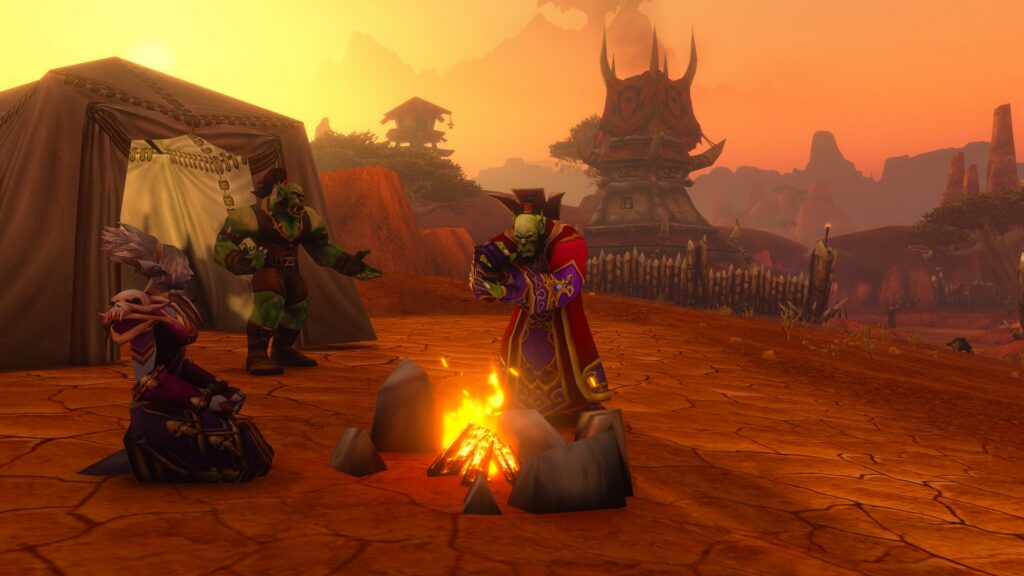 Visuals have actually improved quite a bit since the original, especially water, lighting, and character models. Bags and inventory are now grouped together (I can’t believe we had to hunt and peck through individual bags before!). New race and class combos have been added, and talents and abilities have been rebalanced and improved.
There are also a huge amount of options to help tune the MMO to every player’s specifications. For example, I like turning on a visual bar to indicate the cooldown speed on my main auto-attacks, but I leave auto-loot off because I’m a weirdo who finds satisfaction on clicking each item from a defeated enemy. And for something completely new: controller support!
I’m also enjoying how the new campfire system brings people together for easy buffs, and, as an alt-aholic, looking forward to the Legacy system that rewards leveling multiple characters.
WoW: Forever focuses more on the leveling journey, rather than the race to the end-game destination. The addition of nine new dungeons, and several new regional zones, helps support a wider variety of content.
As a dad gamer, I very much appreciate the appeal of a slower-paced, more casual MMORPG!
I never realized I’d be this distracted from playing GTA 6, a game I’ve been anxiously awaiting for over a decade, by a remade Zelda and a downgraded World of Warcraft. But such is the power of nostalgia.
It’s 2026, and I couldn’t be happier.