

On October 21, 2026, gaming publisher Electronic Arts issued hundreds of layoffs, including the closure of 30-year gaming studio, BioWare. The in-development Mass Effect title has been cancelled.
It’s the end of an era for one of gaming’s most beloved developers, though the writing has been on the wall for quite some time.
In 2025 I wrote about witnessing the slow death of BioWare. And now, the coffin has officially been lowered.
Time for a eulogy.
Dungeons & Stars
BioWare was founded in 1995 in Canada by doctors Ray Muzyka, Greg Zeshcuk, and Augustine Yip. The trio had a passion for programming and gaming, leading to the formation of video game studio, BioWare.
Their first game, Shattered Steel, was a moderately successful take on the Mechwarrior series. But it was their sophomore game, Baldur’s Gate, that would cement their legacy. The D&D-licensed RPG was a smash hit when it released in 1998, revitalizing the computer RPG genre, and introducing Dungeons & Dragons to a whole new audience.
The engine they developed for the game, Infinity Engine, translated the tabletop RPG experience into a real-time-with-pause tactical strategy game. Publisher and developer Interplay would license the Infinity Engine to make several more D&D-based RPGs, and BioWare released their own sequel, Baldur’s Gate 2, over the next several years.
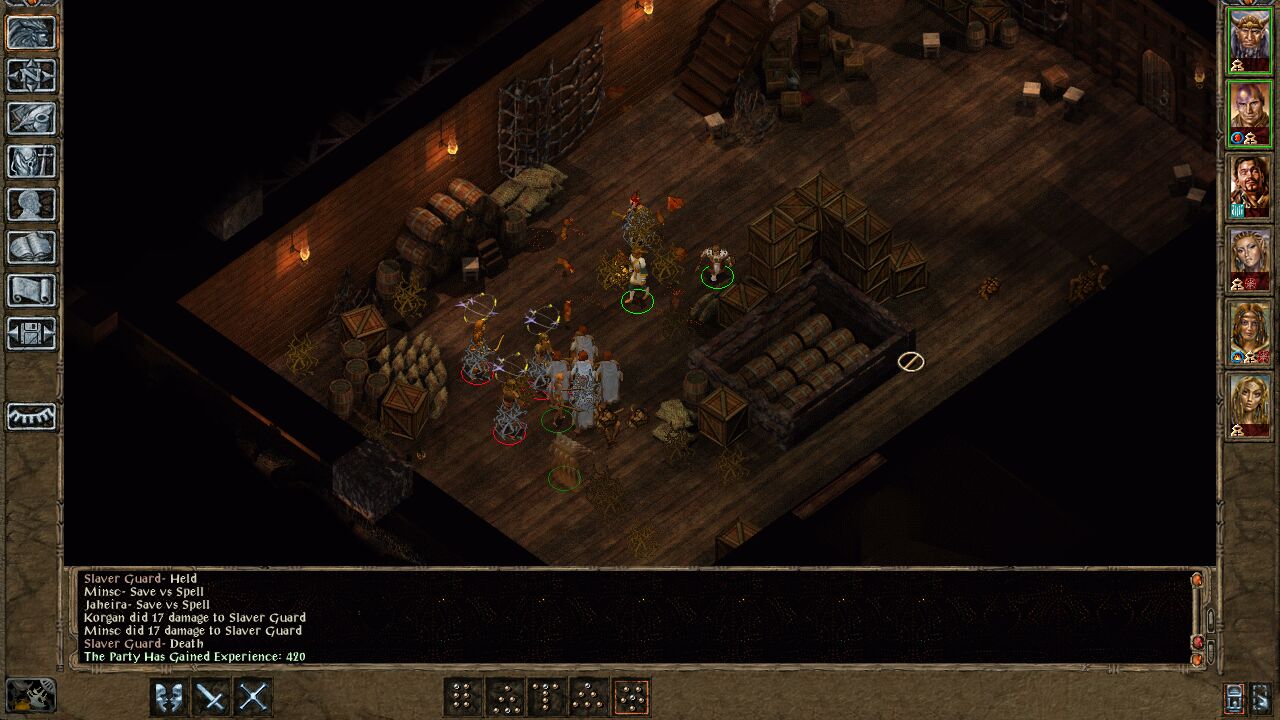
Baldur’s Gate 2 defined an era of CRPGS.
BioWare continued to specialize in RPGs, and released one of the best Star Wars games ever made in 2003, Knights of the Old Republic, which was also an RPG. BioWare would build upon KOTOR’s successful action-RPG systems with original RPG, Jade Empire, in 2005, which was inspired by Chinese mythology.
I was personally a huge fan of BioWare’s Neverwinter Nights (released in 2002). The spiritual successor to the Baldur’s Gate series unlocked modding and creation tools in another D&D-based game, and was way ahead of its time with user-generated content and premium DLC.
The Golden Years
In 2007, BioWare was acquired by Electronic Arts, and released sci-fi shooter-RPG, Mass Effect.
The Mass Effect series is considered by many as the developer’s magnum opus, with everything the studio is loved for: rich story-telling, memorable characters, cinematic moments, and meaningful choices.
The first game is amazing, setting up an intriguing world of alien empires and renegade robots. But it’s admittedly rough around the edges when it comes to exploration and combat.
BioWare refined the gameplay for Mass Effect 2 in 2010, which is often labeled the best of the series, and one of the single greatest games of all time.

Mass Effect 2 is considered one of the greatest games of all time.
In 2011, BioWare had spun up a team based in the US, and released one of the most beloved MMORPGs of all time, Star Wars: The Old Republic. SWOR is one of the few MMOs to survive to this day, though it’s been out of BioWare’s hands since 2023.
At the same time, BioWare developed a new, original fantasy series outside of the D&D license. Dragon Age: Origins released in 2009, and became another smash hit, and a worthy follow-up to the Baldur’s Gate/NWN legacy, with tactical combat, multiple origins and endings, great writing, and beloved companions.
The Dragon Age series rapidly spawned two more sequels, the more story and character-focused Dragon Age 2 in 2011, and the expansive, semi-open world of Dragon Age: Inquisition in 2014. The sequels were largely successful and well-received, even as the series veered more towards Mass Effect-like action over the original tactical gameplay of Origins.
Somehow, BioWare also wrapped up the Mass Effect storyline with Mass Effect 3 in 2012, which infamously became one of the biggest controversies in modern gaming history. The feedback on the ending motivated BioWare to release the Extended Cut DLC to address some of the criticisms.
Dark Age
Many fans reach back to Mass Effect 3’s ending woes as the beginning of the end for BioWare. And, as if sensing the troubles to come, remaining cofounders Muzyka and Zeschuk retired from the industry in 2012. The original creators and writers of the Mass Effect and Dragon Age series would similarly depart over the next several years, creating a rollercoaster of turnover that the company would never fully recover from.
Mass Effect Andromeda was released in 2017. The bug-ridden follow-up to the trilogy was met with middling response from critics and fans, who had high hopes for a new storyline and cast in the beloved sci-fi universe. Disappointing sales effectively froze the entire series, as BioWare went all in with their next big original title, Anthem.
Anthem was a brand new sci-fi IP, designed for co-op action. Partially inspired by Destiny and Iron Man, players would fly around in personal exosuits completing missions on a dangerous alien planet.
Anthem’s multi-faceted problems could be the subject of an entirely separate article, but suffice to say it was plagued with development problems and production issues for years.
Anthem released in early 2019, five years after its first announcement at E3. Despite eventually selling several million copies, it was a commercial and critical flop — usually a death sentence for any major studio.

As of 2026, Anthem is no longer playable.
When things get bad, go back to your roots. Hope for BioWare landed squarely at their two big original IPs: Mass Effect, and Dragon Age.
A new Dragon Age game was already in development, and already plagued by turnover and production. At one point, the game was designed as a multiplayer title, before shifting back to singleplayer.
A new Mass Effect game was also announced at The Game Awards 2020. It would never release.
Dragon Age: The Veilguard finally released in 2024, continuing the story from Inquisition a decade ago, including some of the same characters (though only a handful of imported choices). The last-minute shift from live service co-op game to single-player RPG didn’t do the game any favors. Reviews for the action-oriented gameplay were generally good, but story and writing, once BioWare’s strong suits, were cited as the most disappointing elements.
Fans were even less forgiving. The Veilguard still has a ‘Mixed’ user rating on Steam, and the game would receive no DLC.
Three major disappointments over the last decade.
Knights of the Old Legacy
It’s fashionable to blame EA as the big bad publisher who wrecks everything it touches (and there’s certainly precedence for that!). And it’s impossible to ignore that EA was recently purchased by the Saudi Arabia Public Investment Fund in 2025.
But BioWare itself is far from blameless. Despite cranking out six AAA single-player RPGs and a huge MMO in the span of seven years, the studio floundered when it branched out to cooperative action games and live service concepts. The studio suffered from numerous management and production woes that at least partially reflect the struggle of modern big-budget game design. A single game was taking four, five, or more years to produce, only to be met with harshly disappointing sales.
It’s upsetting that Mass Effect and Dragon Age have ended on sour notes. In 2021, BioWare finally released the Mass Effect: Legendary Edition, a well-received remaster of the original trilogy. With BioWare officially shuttered, it’s unclear if Dragon Age will ever receive the same treatment.

The Legendary Edition is an excellent remaster of the trilogy.
But there’s no denying BioWare’s legacy. It’s thanks to their innovation and success that we have awesome RPGs and series such as The Witcher (fun fact: the first game literally used the Aurora engine from NWN!), The Outer Worlds, Cyberpunk 2077, Divinity: Original Sin, and of course, the massive generational success that is Baldur’s Gate 3.
Thank you, BioWare, for creating some of my all-time favorite gaming memories: reuniting with allies in Baldur’s Gate 2, playing countless modules in Neverwinter Nights, experiencing Shepard’s epic story in Mass Effect, and discovering the secrets of the Grey Wardens of Dragon Age.
“What generations of BioWare built together is something to celebrate and remember,” said the studio in an official statement on social media. “These games became so much more because you played them, debated your choices, fell in love with the characters, and made these world your own. From all of us at BioWare, thank you for being the most meaningful part of our story.”